Wednesday, 9 July 2014

Stories of Sherborne

8th July 2014

By Jack Welch, Volunteer Press Officer

The WITS team got their backpacks and time travel gear on today, as we made an adventure to trace the footsteps of Dorset's famous pilgrimaging Saint, St. Aldhelm and Sherborne's role in early Saxon history. Alongside our familiar friend from Dorset Young Remembers, Pippa Brindley, the group would also participate in a storytelling workshop later in the afternoon which will equip the group with vital skills in creating concise and attention-grabbing tales for our caches. Firstly though, we made our visit to the Abbey in the centre of the town Shown around by Education Officer of the Abbey, Lesley McCreadie, the group observed the magnificent architecture that surrounded the church and because of the later Norman invasion, St. Aldhelm, who was the first Bishop of the Abbey, would not have recognised its features his much simpler Abbey building was believed to have been next to today's building in 705.

Not knowing what the famous Bishop really looked like can pose a challenge to most artists. There were at least three interpretations of the famous Bishop that we saw, some of which you can see here:


The group also witnessed the tomb of Sir John Horsey and his son, the former being the man who had purchased the church after the monasteries were dissolved in the Tudor era and saved the Abbey being destroyed by Henry the VIII. As we approached the end of the tour, the group were also pointed to a Mermaid in the roof of the Abbey, which has now become a phenomenon for the visitors to the historic site.

Thanking Lesley McCreadie for the insightful tour, we ventured down to Pagent Gardens for a well-deserved lunch break (where treats included a mix of tiffin, flapjack and oranges!) As the sunny conditions pressed on into the afternoon, we were able to begin our workshop with Pippa in the gardens. As the session got underway, our first challenge wasn't far behind us, as Pippa put our skills of short and snappy storytelling to the test from what we did earlier in the morning. With a stricken match acting as our stopwatch, the group had to cope with the pressure of this initial challenge. Once the group had shared stories about stray cats, stolen army helmets and lunches, everyone pulled together in smaller groups to use our imaginations in adding descriptions of the Papa New Guinea myth of dogs who came to meet in a large castle. From the bizarre to the elaborate, we all shared some wacky ideas on how the dogs would take off their tails or how the gran castle may look on top of the mountain.

Following that, we all allocated ourselves prescribed words on a story to be fed back to the group once we had written something on paper. With words as wide-ranging as 'cardigan' or 'yellow bush' being thrown in, we all probably did rather well in the circumstances. We realised our stories were more entertaining  and engaging if we worked as collaboratively as a group. With the workshop done for now and the group ready to apply their new story telling skills to set some very interesting stories for our Caches, we made our way back with our imaginations switched on for planning the next stage! From our research we know some very interesting facts about St Aldhelm who was a remarkable character himself,and a great one for adventures, we have his poems and his riddle and with our new story telling techniques we want to bring his time in the Dark ages back to life.

Thursday, 3 July 2014

Dorchester and the Great War

Visitors to the Corn Exchange on Friday 8th August can step back in time to experience what life was like in Dorchester during the Great War.

This year marks the centenary of the beginning of World War One in which over 4,500 Dorset soldiers lost their lives.

The free event has been organised by a consortium of partners including Dorchester Town Council, Dorset Youth Association, Dorset County Museum, The Keep Military Museum, a local historian and Dorchester Rotary Club. Any money raised will go to The Rifles “Care for Casualties” appeal.

1st Battalion Dorsets manning Trench 38 Hill 60 – Ypres Spring 1915. Soldier making a makeshift periscope to view German Trench © The Keep Military Museum 2014

The Mayor will open the event at 10:00am and at 10:30am Dorset Youth Association will launch the ‘Walking in their Shoes’ First World War Interactive History trail funded by a grant of £28,200 from the Heritage Lottery Fund (HLF).

There will be talks by local historian Brian Bates and Curator at the Keep Military Museum, Chris Copson.

“It is important to commemorate the sacrifice and the achievement of British soldiers in the war.”

“It was a war of ordinary people achieving extraordinary things.”

“If what we are doing gives people a more accurate idea of what the war was like, that’s very important,” says Chris.

Leaving the Somme Trenches 1st or 6th Dorsets © The Keep Military Museum 2014

Visitors will even be able to dress up in Tommy Uniform, listen to a performance of World War One songs and try some rationed WW1 stew and cake. Bring any WW1 memorabilia to be identified by an expert and share your WW1 family history stories at the listening post. Children can take part in a trench art workshop and have a go at geocaching along the ‘Walking in their Shoes’ trail. The Durnovaria Silver Band will round up the day with a performance at 3:00pm before doors close at 7:00pm.

For further information please contact Steve Newman on 01305 266861 or email s.newman@dorchester-tc.gov.uk.


Tuesday, 1 July 2014

Camping at Avon Tyrrell

Here are a few photos from the Avon Tyrrell camping trip on the 13th to 14th June.
James and Ben hard at work
Michael in the off road BOMA 
Walking in their Shoes group with staff from Avon Tyrrell

Calzone making 


Finishing the walk at Avon Tyrrell


Tuesday, 24 June 2014

Camping at Avon Tyrell - 13/14th June

By Jack, Michael, and James.

At Avon Tyrrell
This weekend the group stayed at Avon Tyrrell outdoor activity centre, to learn navigation skills (useful for setting up our walks) and experience life as a First World War soldier. We pitched and slept in Bell tents, which involved an individual supporting a pole whilst others set the tent over the top. Sleeping in the tents was an enjoyable experience, despite the fact there was rain full which woke us all up.

The activities for the weekend included, map reading tasks, in which we split into teams of three and explored the area in search of check points, within thirty minutes. This exercise enabled us to learn orienteering skills to help us with our walk.

Our Pizzas!
Ashley leading the way.
Making the Hay Box
In addition, the group also challenged themselves to prepare and cook a pizza on a camp fire, with only basic equipment available, similar to the conditions soldiers would have had in the trenches. We had create a  pizza dough using gluten free flour, which proved a challenge to the making of the base, as it lacked in texture. We then added tomato sauce on top and grated cheese along side a pepperoni topping. The pizza was then folded and placed on top of a wire sheet above the camp fire. We allowed twenty minutes for it to be cooked and the result was a messy and soft pizza pasty which was not pleasant to eat. We also cooked a replica Maconchie stew similar to Irish stew which soldiers would have ate during the war, a definite improvement from the pizza disaster! We even practiced keeping the food warm in our own hay box.

Michael in the buggy
On Saturday the group ventured across Avon Tyrrell  into the New Forest where we individually navigated the entire group in order to return to our original destination. We ventured through open moors and through dense woodland of the forest, leading to open roads. One of our volunteers Michael drove a an all terrain BOMA buggy which allowed him to cross difficult areas that he otherwise would have not been able to. The walk was equally enjoyable as well as a challenge for all of us because of the hot temperature. The purpose of this walk was to enable us to set up our own walks whilst improving our navigation skills and team work. This was also to try and replicate the journey of a soldiers training for war.

The weekend showed us we were able to work well outdoors as a team and behave responsibly. We learned skills in navigation, cooking, communicating and map reading.We are very grateful to our tutors, Damon and Lewis, at Avon Tyrrell for their support and giving us fun activities to do. We would love to come back again soon!

Thursday, 12 June 2014

Soldiers in Training

By Jack Welch, Volunteer Press Officer

10 June 2014

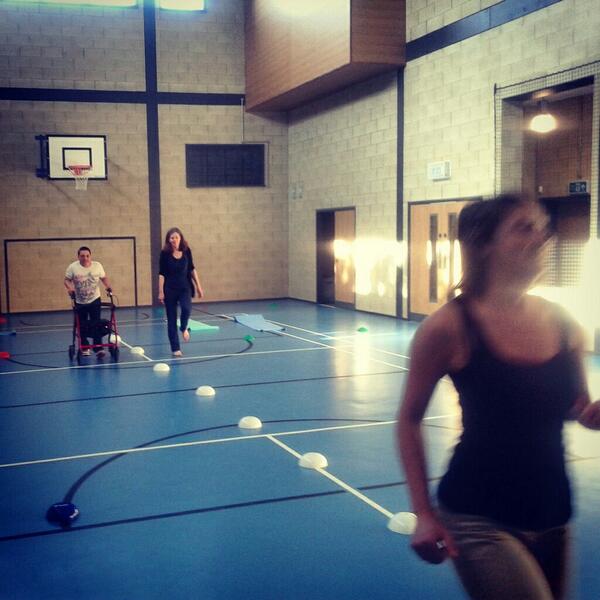
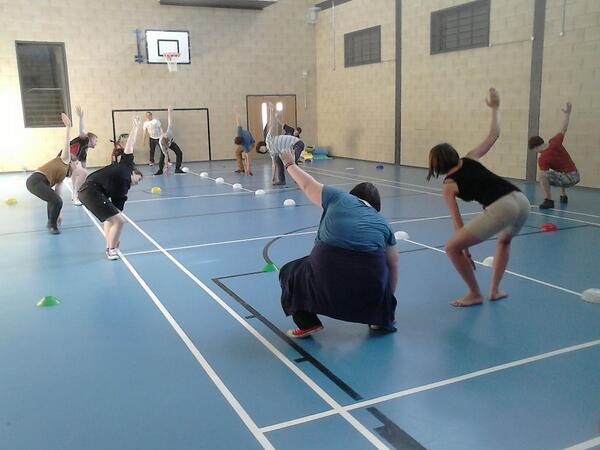
Embedded image permalinkThe WITS team were thinking about healthy living today, as we made a trip to the STEPS Youth Club in Weymouth for an accredited course in considering their lifestyles and experiencing first-hand the physical training of a World War II soldiers. Despite the fact our project focuses on the previous War, research found that fitness courses for volunteer soldiers for this era, and previously, was rather inconsistent for using Swiss techniques, which for many who went on the frontline, were greatly unprepared for what confronted them. It wasn't until the introduction of the Parkour training discipline, and the methods of how American G.I.'s were trained, that a change came about.

The group first underwent a circuit course, which encompassed exercises including press-ups and sit-ups, as well as jump squats and shuttle runs. Like any good fitness fanatic, we had a good warm-up first to ensure our joints and muscles would be flexible as possible for the training ahead and we'd be ready for whatever was thrown at us. In small teams, the groups went through each discipline for a maximum of two minutes (a blessing, probably for some) and began to feel the burn as a soldier might have done on a regular basis. For many in the group though, they made the most of the physical challenges and only wished they could go outdoors in the brilliant sunshine outside.

Embedded image permalinkFollowing that, the group made their way to the meeting room, where greeted with a healthy selection of snack-bars and an assortment of fruit, we now went into what makes a good healthy diet for most people. Looking at topics on the recommended food varieties we should eat, such as vitamins and minerals, carbohydrates and fibre sourced products, as well as recommended sleep amounts in the evening, the group were surprised just to see the number of dangerous foods that  caused issues as diabetes, insomnia and obesity. However, it's not just the food we eat which can be trusted for a healthy body alone - without actual exercise, any of the natural fats and sugars we consume would become food waste inside our bodies. It looks like that having the healthy mindset is equally as important to get out and about.

With this weekend's camping in the New Forset, we'll be sure our bodies will be in tip-top condition for the coming activity!

Thursday, 8 May 2014


 Here is a picture of veteran paratroopers sitting in the restored Dakota plane that they flew in during the second world war. This is not entirely relevant to our First World War project, but we felt it was an amazing photograph, worth sharing with you.

Tuesday, 6 May 2014

Presentation at Care South HQ in Poole.

Members of our team came to explain how to take and record Oral History. The team: James, Ash, Becki, Rosie, Julia, Liz, Ben, and Greg were joined by Maria from the Dorset History Centre. We talked about recording peoples memories, including the technical aspects. James and Becki were lead presenters. Ash was the Hub team representative. Rosie and Julia talked about the interview they made with Joyce, who is now ninety two, her mother worked in a cafe for World War One soldiers in Dorchester.

Ash demonstrates an audio recorder.
Carers trying out an audio recorder.

The carers had a chance to have a go at recording each others own memories. We used  Power-point to present and provided the audience members with our Oral History training guide. This was the second training session we have given aimed at adults. We hope that the participants can now record the memories of the residents that they work with. The audience feedback was very positive.

Group shot of our team and members of the audience.